Many companies worry about material shortages. And rightly so. No one wants to delay a project because a part is missing.
But there is another problem that often flies under the radar: too much inventory.
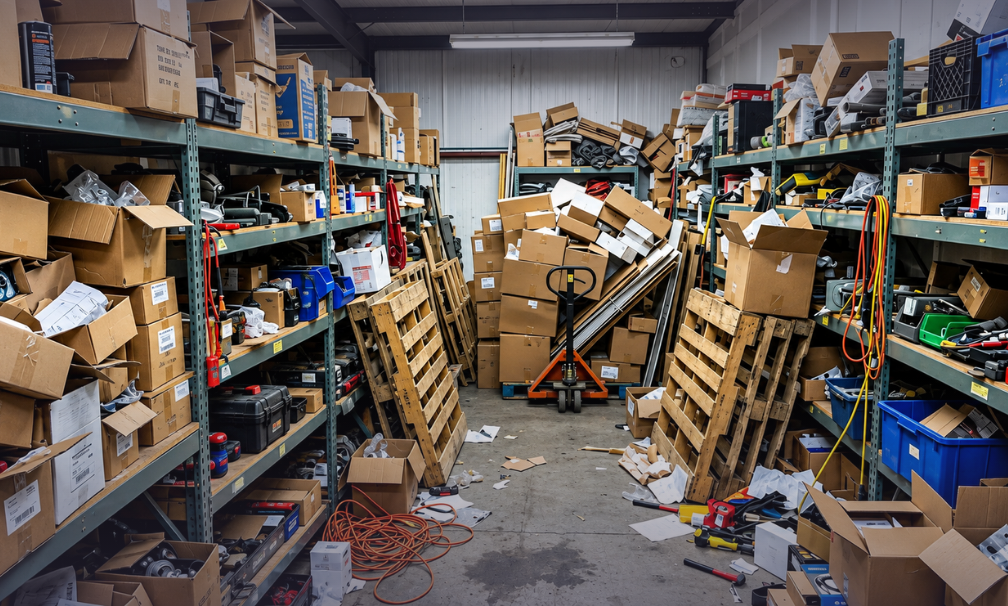
A warehouse full of materials feels safe. After all, you always have something on hand. Yet in practice, excessive inventory often costs a lot of money. Not only because the materials have been purchased, but also because they take up space, create a lack of overview, and sometimes remain untouched for years.
The challenge is that excess inventory often builds up unnoticed. That’s why we’ve listed five signs that indicate you are holding more stock than necessary.
Sign 1: You regularly order materials that turn out to already be in stock
This is perhaps the clearest sign. A technician or planner orders materials because no one is sure whether they are still in stock. A few days later, it turns out that the same items were already somewhere in the warehouse.
This happens more often than many companies think. Not because employees make mistakes, but because there is insufficient visibility into the current inventory.
With BarTrack, it is immediately visible which materials are available, how many are in stock, and where they are stored. This helps prevent unnecessary orders.
Sign 2: No one knows exactly what is in the warehouse
Ask different colleagues how much stock is actually available. In many organizations, you will get different answers. Some materials are visible, others are spread across multiple locations. In addition, items are often stored in service vans, project containers, or temporary storage areas.
When no one knows exactly what is available, there is often a tendency to keep extra stock “just in case”. But that level of certainty comes at a cost.
Sign 3: You regularly come across old or forgotten materials
Almost every warehouse has a corner where materials are stored that no one remembers why they were ever purchased.
Boxes that have been in the same place for years. Spare parts for projects that were completed long ago. Materials whose packaging has long since turned yellow.
This inventory still represents value, but it no longer generates anything.
With BarTrack, companies can gain better insight into which items are used frequently and which materials remain in storage for long periods. This makes it easier to optimize inventory levels.
Sign 4: Your warehouse keeps getting more crowded
When available space becomes increasingly tight, it is often a sign that materials are being stored longer than necessary.
As a result, employees spend more time searching, materials are moved more frequently, and overall overview decreases.
A more crowded warehouse therefore leads not only to higher inventory costs, but also to lower productivity.
By gaining insight into inventory levels and material flows, companies can better determine which items truly need to be kept in stock and which do not.
Sign 5: You have a lot of money tied up in inventory, but you don’t know what it is tied up in
This is perhaps the most important sign.
Many companies roughly know how much inventory value they have, but they lack a clear understanding of what that value actually consists of.
As a result, it becomes difficult to make decisions. Which items are essential? Which materials are hardly used? Which stock can be reduced without risking operations?
When this information is missing, excess inventory often continues to grow unnoticed.
BarTrack helps companies gain better insight into their inventory position, enabling more informed and better-supported decisions.
More inventory does not automatically mean more control
It may seem logical to keep extra stock on hand to prevent problems. In practice, however, this often leads to the opposite effect.
The more materials you have, the harder it becomes to maintain overview. As a result, searching, duplicate orders, and inventory discrepancies actually increase.
Companies that truly have control over their inventory do not necessarily have more stock. They simply have better insight into what is available, where it is located, and how it is being used.
How BarTrack helps with inventory optimization
BarTrack makes inventory transparent by centrally recording materials, storage locations, service vehicles, and project stock.
This makes it visible which items are used frequently, which materials remain in storage for long periods, and where all stock is located.
With this information, companies can better determine which inventory is necessary and where savings can be made.
The result is a more organized warehouse, fewer unnecessary purchases, and more efficient use of working capital.
Summary
An excessive inventory may seem safe, but it often comes with hidden costs. Signs such as duplicate orders, a lack of visibility, old materials, and an overcrowded warehouse indicate that there may be more stock than necessary.
With BarTrack, you gain insight into your inventory, locations, and material flows, enabling you to better manage stock levels and prevent unnecessary costs.


.png)

 Joelle Hablé : Aug 17, 2026, 12:36:41 PM